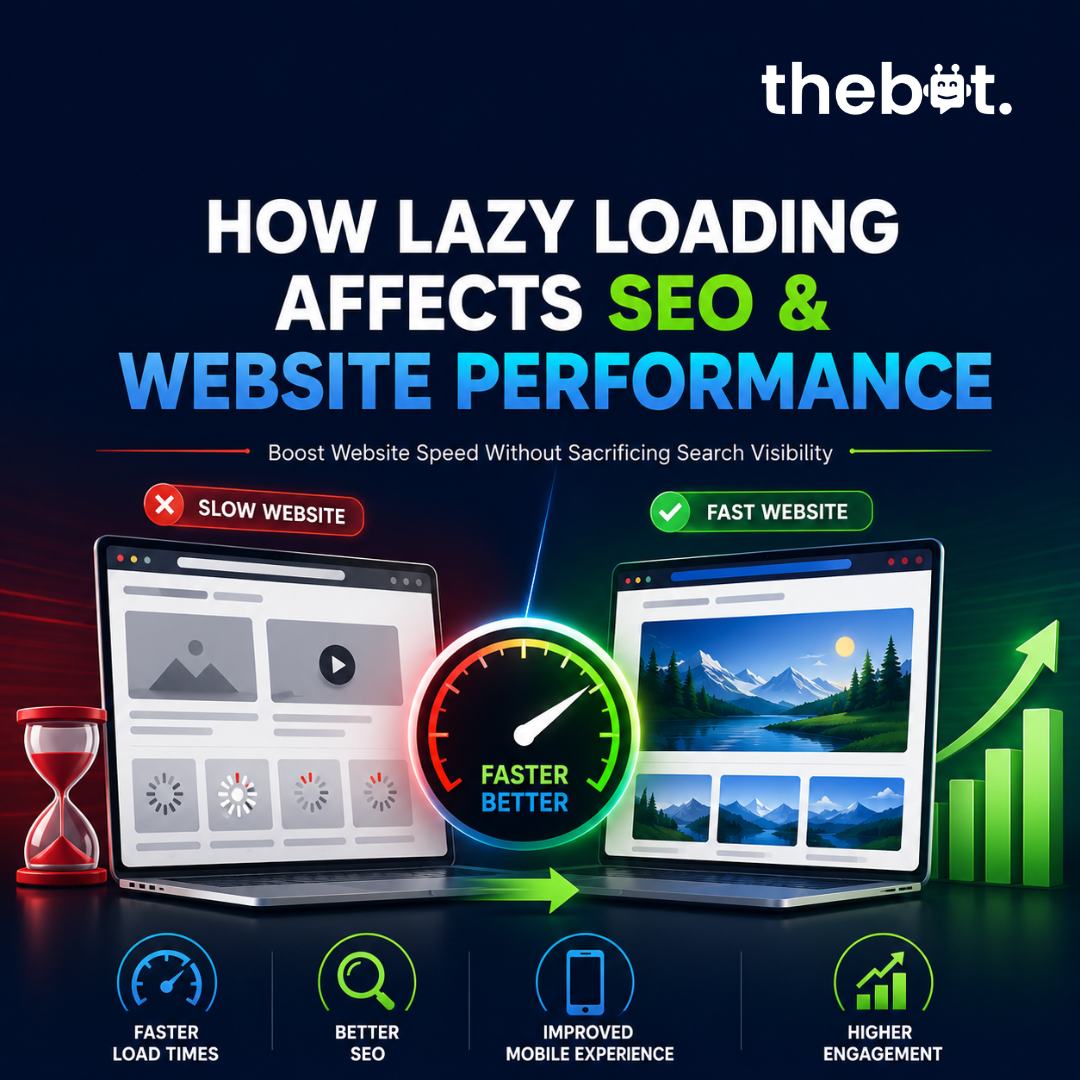
How Lazy Loading Affects SEO and Website Performance | Improve Speed & Rankings
In this article:
Discover how lazy loading impacts SEO and website performance. Learn best practices to improve page speed, Core Web Vitals, user experience, and search rankings without affecting crawlability.
Introduction
In today's digital landscape, website speed plays a critical role in both user experience and search engine rankings. Visitors expect web pages to load quickly, and search engines prioritize websites that deliver a seamless browsing experience. As websites become more media-rich with images, videos, and interactive content, maintaining fast loading times becomes increasingly challenging.
One effective solution is lazy loading, a technique that delays the loading of non-essential content until users scroll to it. While lazy loading can significantly improve website performance, businesses must ensure it is implemented correctly to avoid potential SEO issues. Understanding the relationship between lazy loading, SEO, and website performance is essential for maximizing online visibility and user engagement.
Problem Statement
Many websites struggle with slow loading speeds due to large images, embedded videos, and heavy page elements. These performance issues can lead to:
- Increased bounce rates
- Lower user engagement
- Reduced conversion rates
- Poor mobile experiences
- Lower search engine rankings
To address these challenges, website owners often implement lazy loading. However, when configured incorrectly, lazy loading can create SEO problems such as:
- Search engines failing to discover important content
- Images not appearing in image search results
- Reduced crawlability
- Incomplete indexing of key page elements
The challenge is finding a way to improve website speed without negatively impacting search engine visibility.
How We Solve It
A successful lazy loading strategy requires a balance between performance optimization and SEO best practices.
Prioritize Critical Content
Content that appears immediately when a page loads should be displayed without delay. This ensures visitors can access important information quickly and improves user experience.
Implement SEO-Friendly Lazy Loading
Modern lazy loading techniques allow search engines to crawl and index content effectively while still reducing the amount of data loaded during the initial page visit.
Optimize Images and Media
Combining lazy loading with image compression, next-generation image formats, and efficient media delivery creates substantial performance improvements.
Improve Core Web Vitals
Proper lazy loading can positively impact key performance metrics, including:
- Largest Contentful Paint (LCP)
- Interaction to Next Paint (INP)
- Cumulative Layout Shift (CLS)
These metrics directly influence both user satisfaction and search rankings.
Monitor Performance Continuously
Website performance and SEO should be monitored regularly to ensure that optimization efforts continue delivering results as content grows and user behavior evolves.
To identify performance bottlenecks and SEO issues affecting your website, request a free website audit at:
https://freeaudit.thebot.agency/
Case Study
Improving Performance for a Content-Heavy Website
A business operating a content-rich website experienced declining engagement despite publishing high-quality content regularly. Analysis revealed that large images and media assets were slowing page load times, particularly on mobile devices.
Challenges
- Slow page speed across multiple pages
- Poor Core Web Vitals scores
- High bounce rates
- Reduced user engagement
Solution
A structured optimization strategy was implemented that included:
- Lazy loading for below-the-fold images
- Image compression and optimization
- Improved content delivery
- Performance testing and monitoring
Results
Following implementation, the website achieved:
- Faster page loading times
- Improved user engagement
- Better mobile performance
- Lower bounce rates
- Increased organic search visibility
The improvements demonstrated how proper lazy loading can enhance both website performance and SEO outcomes when executed correctly.
Conclusion
Lazy loading is a valuable performance optimization technique that helps websites load faster, improve user experiences, and support better search engine rankings. However, the benefits are only realized when it is implemented with SEO considerations in mind. Businesses that focus solely on speed without considering crawlability and indexing can unintentionally limit their search visibility.
By adopting SEO-friendly lazy loading practices, organizations can achieve the best of both worlds: faster websites and stronger organic performance. Regular audits and performance assessments are essential for identifying opportunities and ensuring that optimization efforts continue delivering results.
Want to find out whether your website's lazy loading strategy is helping or hurting your SEO? Get a free website audit today:
Frequently Asked Questions
Lazy loading is a performance optimization technique that delays the loading of images, videos, and other non-critical content until users scroll to that section of the page. This helps reduce initial page load times and improves user experience.
Yes, when implemented correctly. Lazy loading can improve page speed and Core Web Vitals, which are important ranking factors. However, poor implementation may prevent search engines from indexing important content.
It can if search engines cannot access or crawl important images and page elements. Using SEO-friendly lazy loading methods ensures content remains discoverable while improving performance.
Lazy loading can improve metrics such as Largest Contentful Paint (LCP), Interaction to Next Paint (INP), and overall page responsiveness by reducing the amount of content loaded initially.
5. Which website elements should use lazy loading? Below-the-fold images, videos, embedded content, and non-critical page elements are ideal candidates for lazy loading. Critical content visible when the page first loads should not be delayed.