
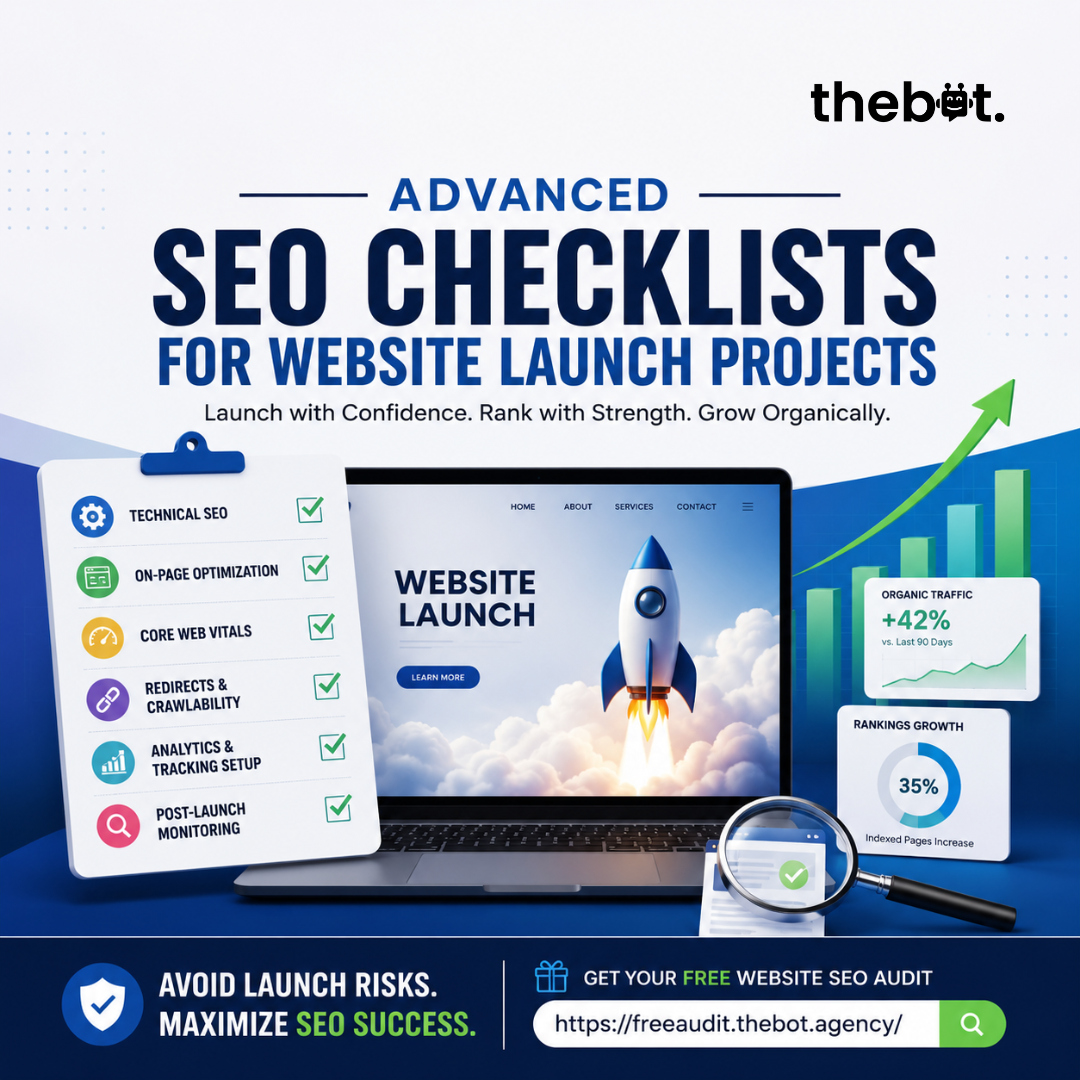
New website launch SEO checklist: technical requirements, canonical tags, structured data, mobile optimization, and on-page best practices.
Introduction
Launching a new website is an exciting milestone for any business. However, even the most visually appealing and technically sophisticated website can struggle to generate traffic if SEO is overlooked during the launch process. Search engines need clear signals to understand, index, and rank your website effectively. Missing critical SEO elements during launch can lead to indexing issues, ranking drops, poor user experience, and lost business opportunities.
A successful website launch requires careful planning, technical precision, and a comprehensive SEO strategy to ensure your site is fully optimized from day one. An advanced SEO checklist helps businesses avoid common pitfalls and create a strong foundation for long-term organic growth.
Problem Statement
Many businesses focus heavily on design, functionality, and content while underestimating the importance of launch-stage SEO. As a result, common issues often arise:
- 1Search engines fail to index important pages.
- 2Broken links and redirect errors create poor user experiences.
- 3Metadata is missing or duplicated across pages.
- 4Website speed and Core Web Vitals are not optimized.
- 5Mobile usability issues negatively impact rankings.
- 6Structured data implementation is incomplete or incorrect.
- 7Existing rankings are lost during website migrations.
- 8Analytics and tracking systems are not properly configured.
These mistakes can significantly impact search visibility, website performance, and lead generation during the critical weeks following launch.
How We Solve It
A structured SEO launch process helps eliminate risks and ensures every critical element is addressed before and after deployment.
1. Technical SEO Verification
Before launch, conduct a complete technical audit to ensure:
- 1Proper robots.txt configuration
- 2XML sitemap generation and validation
- 3Crawlability and indexability checks
- 4Canonical tag implementation
- 5HTTPS verification
- 6Redirect mapping and testing
2. On-Page SEO Optimization
Every important page should include:
- 1Optimized title tags
- 2Compelling meta descriptions
- 3Proper heading structure (H1-H6)
- 4Keyword-focused content optimization
- 5Internal linking strategy
- 6Image optimization and alt text
3. Performance & Core Web Vitals Review
Evaluate:
- 1Page speed performance
- 2Mobile responsiveness
- 3Largest Contentful Paint (LCP)
- 4Interaction to Next Paint (INP)
- 5Cumulative Layout Shift (CLS)
These metrics directly impact both rankings and user experience.
4. Analytics & Tracking Setup
Verify:
- 1Google Analytics implementation
- 2Conversion tracking
- 3Event tracking
- 4Goal configuration
- 5Search Console integration
5. Post-Launch Monitoring
SEO efforts should continue after deployment by monitoring:
- 1Indexing status
- 2Crawl errors
- 3Traffic trends
- 4Ranking fluctuations
- 5Technical issues
For businesses that want to identify hidden SEO issues before launch, a comprehensive free audit can provide valuable insights: https://freeaudit.thebot.agency/
Ready to Discuss Your Business Goals?
Connect with our experts for a free consultation. We'll understand your business, discuss your challenges, and recommend practical strategies and technology solutions to help you achieve sustainable growth.
Frequently asked questions
QWhy is SEO important before launching a website?
SEO is essential before launch because it helps search engines properly crawl, index, and rank your website. Without SEO preparation, businesses may experience traffic loss, indexing issues, and poor search visibility from day one.
QWhat should be included in a website launch SEO checklist?
A website launch SEO checklist should include technical SEO audits, XML sitemap validation, robots.txt review, redirect mapping, metadata optimization, mobile responsiveness checks, Core Web Vitals improvements, and analytics setup.
QHow can website migrations affect SEO rankings?
Website migrations can negatively impact rankings if redirects are not properly implemented or if important pages are not optimized. A detailed migration strategy helps preserve rankings and maintain organic traffic.
QWhat are Core Web Vitals and why do they matter?
Core Web Vitals are performance metrics that measure user experience, including page load speed, interactivity, and visual stability. Google uses these signals as ranking factors, making them important for SEO success.
QWhy should businesses perform a post-launch SEO audit?
A post-launch SEO audit helps identify indexing problems, crawl errors, broken links, ranking fluctuations, and technical issues that may arise after deployment, ensuring long-term website performance and visibility.